How to Govern MCP Servers: An Identity Governance Playbook
MCP servers give AI agents real access to real systems. A practical playbook for discovering, owning, scoping and reviewing MCP servers like any other identity.


MCP servers give AI agents real access to real systems. A practical playbook for discovering, owning, scoping and reviewing MCP servers like any other identity.

An Agent Control Plane registers AI agents, gives each an owner and approved scope, enforces policy on what they do, and proves it to auditors. Here is what it includes and how to evaluate one.

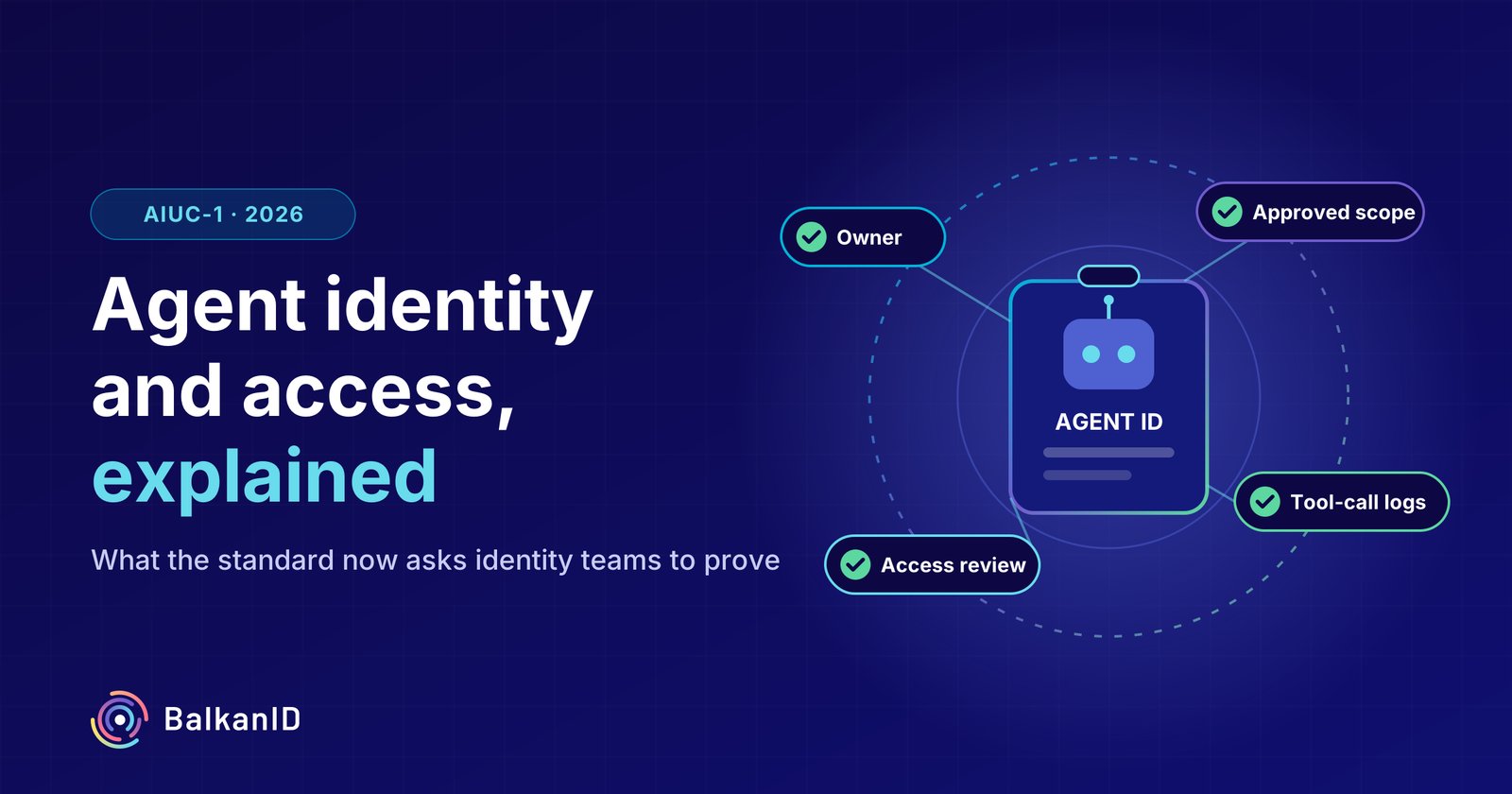
AIUC-1 now treats agent identity and access as its own domain. Here is what the 2026 updates require, why shared service accounts fall short, and a 30-60-90 plan to prepare.


MCP servers give AI agents real access to real systems. A practical playbook for discovering, owning, scoping and reviewing MCP servers like any other identity.

The Model Context Protocol lets an AI agent call tools in other systems through an MCP server. Each server is effectively a set of permissions: read this repository, update that ticket, query this database. Once a team connects a few agents to a few servers, the organization has a new class of access that rarely shows up in an access review.
In the current MCP specification, authorization is optional. When servers do use it, they build on OAuth 2.1, but many internal servers run with a static token or a developer's personal credentials. That means access granted to one person can quietly become access for every agent that uses the server.
The BalkanID Agent Control Plane discovers MCP servers, records owners and scope, checks tool calls against approved scope, and puts MCP access into the same reviews as everything else. Teams can also use the BalkanID MCP server to let approved agents work with governance data directly.
Sources: Model Context Protocol specification (revision 2026-07-28); Cloud Security Alliance research note on AIUC-1 Q2 2026.